Chicago area gets warmer but more rain headed this way
Stay with the First Alert Weather team as we begin May, which is typically the wettest month of the year.
Watch CBS News

Meteorologist David Yeomans joined the First Alert Weather team in 2024. You can see him on CBS News Chicago weekdays at 11 a.m. and 4 p.m., and reporting on the Climate Watch team.
David has been fascinated by the weather for as long as he can remember, becoming a National Weather Service-registered storm spotter at age 9. He went on to earn bachelor's and master's degrees in meteorology from the University of Miami. David holds the Certified Broadcast Meteorologist seal from the American Meteorological Society.
David studied under world-renowned climate change expert Dr. Brian Soden, publishing undergraduate research on the relationship between water vapor in the upper atmosphere and global warming. His graduate studies focused on hurricane rapid intensification and the role of mid-tropospheric humidity. He took a flight aboard the NOAA Hurricane Hunter aircraft as a Guest Scientist.
Prior to working at CBS, David was Chief Meteorologist at the NBC affiliate in Austin, TX, where he worked for 12 years.
David has been awarded four Emmy Awards, including for an investigation on climate change affecting Texas' water supply and for an educational weather series. He was named Best Weather Anchor by the Texas Association of Broadcasters. David appeared on the History Channel's "I Was There" series and GQ's "The Breakdown" as a weather expert, and was a TEDx speaker on climate change.
Stay with the First Alert Weather team as we begin May, which is typically the wettest month of the year.
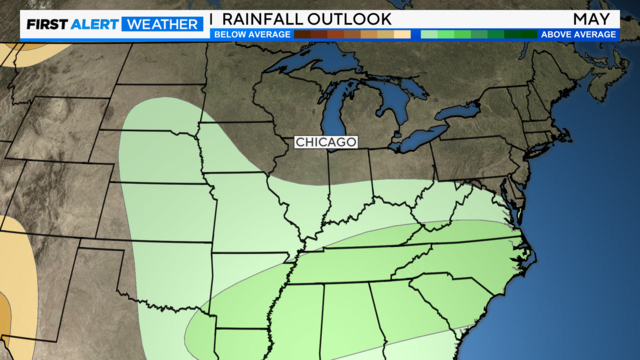
As the climate warms, May rainfall is getting heavier in Chicago.
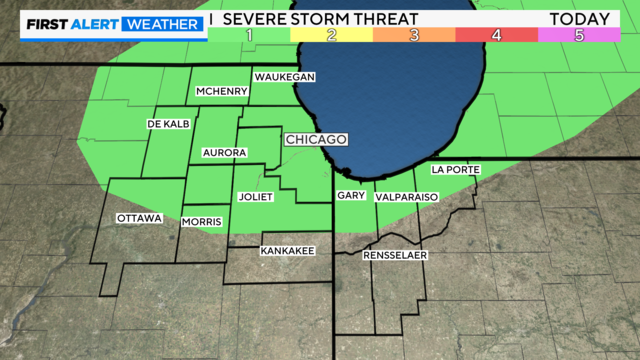
The storms are expected to remain below severe criteria but may produce lightning and brief heavy downpours.
Following the area's recent chill, it appears warmer than normal temperatures that begin this weekend will continue all of next week.
Patchy frost and a rural light freeze are possible on Wednesday night as winds relax.
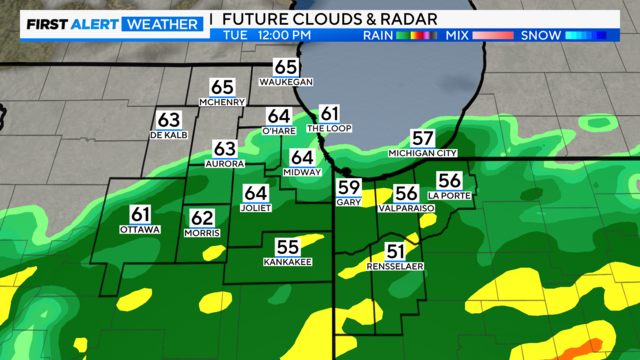
Behind this system, a strong cold front drops low temperatures back into the 30s Tuesday and Wednesday nights, likely leading to more rural frost.
Clear skies and lighter winds will allow temperatures to dip to near-freezing in Aurora, De Kalb, and McHenry.
Data from Chicago O'Hare shows the city just recorded 11 consecutive days of warmer-than-normal temperatures after a brisk start to the month.
Behind the front, windy conditions are in the forecast for Friday, with highs in the mid-50s.